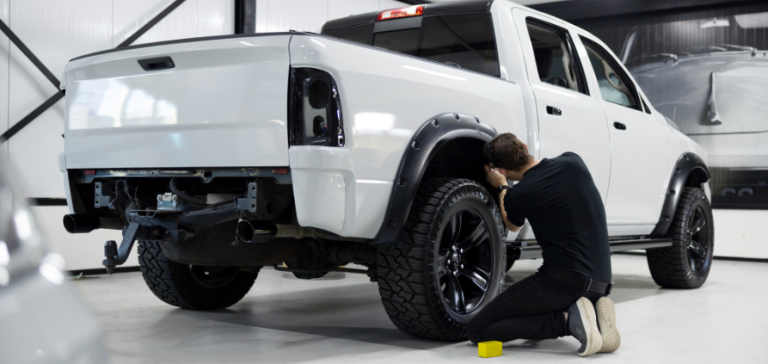
Australians love 4WDs, utes and SUVs for strong torque, commendable stability and reliable towing capacities. Especially 4WDs offer excellent traction for off-road journeys. However, a lot depends on selecting the appropriate towing equipment. It can make or break your ride experience. Choosing the right equipment is essential for your on-road safety and the vehicle’s efficiency. If you are confused about choosing the right equipment for your vehicle, here is a complete guide
Checklist for Deciding the Right Equipment
1. Read the Owner’s Manual
Unfortunately, most vehicle owners do not read the owner’s manual after purchasing the vehicle. It contains crucial details about the vehicle, particularly helpful when considering its towing capacity and compatibility with other cars.
- The type of load you will be towing, such as trailers,boatsor other vehicles.
- The vehicle’s towing capacity as per the owner’s manual.
- Recommended hitch types as mentioned in the owner’s manual.
- GVWR- Gross Vehicle Weight Rating of your vehicle.
- Tongue weight meaning downward force of the trailer on the hitch.
- Weight distribution systems, if any.
- Sway control bars for stability.
Choosing the wrong tow bar types and exceeding the loading limits may result in accidents and inflict severe damage on the vehicle. It is best to have a professional install a tow bar rather than do it yourself. The professional will also advise you if the vehicle requires additional brake controllers for heavier trailers. Do not forget to factor in local towing laws.
2. Learn About Types of Tow Bar
Commonly known as trailer hitches, tow bars come in various designs. You may choose as per car compatibility, towing needs, and preferences.
1. Fixed Tow Bars:
These are permanently attached to the vehicle. The professional installer will bolt them to the vehicle. They are popular for durability and cost-effectiveness. Fixed tow bars are ideal for frequent towing. The only downside is that they can’t be removed easily after installation, which affects the vehicle’s aesthetics and ground clearance.
2. Detachable Tow Bars:
As the name suggests, it can be removed when not required. It helps preserve the vehicle’s appearance. It is ideal for occasional towers.
3. Hidden or Retractable Tow bars:
These are a unique type of tow bars that can be folded or retracted under the bumper when not required. They offer a sleek look and are ideal for modern, swanky cars. Due to their looks and functionality, they are more expensive than their counterparts.
The above-mentioned tow bars are used to tow an RV with a car, ute, or 4WD. However, if you need to tow a car behind an RV, you can choose from non-binding or classic towbars. You will have to get a baseplate custom-fitted to the towed vehicle’s frame.
3. Find Out the Vehicle’s Towing Capacity
This information is provided in the owner’s manual. Towing capacity is the maximum weight your vehicle can safely pull. It includes the trailer and its contents, such as furniture, appliances, a wash area, and others. The factors that determine a vehicle’s towing capacity are engine power, brakes, suspension, and frame strength. It is best to avoid overloading the vehicle, as it may impact its long-term performance and lead to accidents.
It can also cause overheating, triggering a fire or brake failure. Therefore, make sure the vehicle is never loaded beyond its towing capacity. If any damage or accident is caused by overloading, you may also lose the benefits of the warranty and insurance.
You can calculate your vehicle’s towing capacity with some simple steps.
- Find GVWR, GAWR and curb weight. They are mentioned in the owner’s manual or door jamb sticker.
- GVWR (Gross Vehicle Weight Rating) indicates the maximum combined weight the vehicle can carry, including passengers, cargo, fuel and tongue weight.
- GAWR (Gross Axle Weight Rating) shows the maximum weight the axle can carry. GAWR will vary for the front and rear axles.
- Curb weight includes the weight of the vehicle with oil and fuel in its running state. It does not count the weight of passengers or cargo.
To find out a vehicle’s towing capacity, combine the curb weight, passengers and cargo weight and then subtract it from GVWR. You must also count tongue weight, which comprises around 10 to 15% of the trailer’s weight.
The best practice is to never load the vehicle more than 85% of its towing capacity.
4. Car Compatibility
Cars, utes and 4WDs need a necessary structure for towing camper trailers and RVs. So, you have to find out whether your car is suitable for towing a trailer. A professional tow solution provider can help you check a car’s compatibility. After checking the car’s make, model and manufacturing year, they suggest whether the tow bar can be installed without modifications. Using towable cars that are not compatible can lead to serious safety issues.
If your vehicle is compatible with towing, consider these points before installing the towing equipment.
1. Get Customised Hitches and Tow Bars:
Approach a professional tow bar installer for installing custom-designed hitches and tow bars that cater to your towing requirements and vehicle type. They provide solutions tailored to the vehicle’s make, model, and year of manufacture.
2. Tow Bar’s Rating:
Make sure that the tow bar’s matching capacity and rating are adequate to carry the trailer’s weight. Do not try to tow trailers with hybrids, small cars or EVs. You need an SUV, utes or a robust 4WD for the same.
3. Additional Equipment:
Get supplemental brakes for the towing vehicle if the trailers are over 3000 lbs (1360.77 kgs). You may also require base plates for flat towing and wiring harnesses for lighting.
Consult the 4X4 Centre Cleveland for Buying the Right Towing Equipment
When choosing towing equipment, it is best to consult a professional. At 4X4 Centre Cleveland, our team has the knowledge and expertise to guide you in selecting the appropriate towing equipment.
We offer the best-quality towing solutions in Cleveland, Capalaba, and Redland to ensure your vehicle is equipped to handle towing challenges safely and efficiently.
Choose from our wide collection of towing accessories for a seamless caravanning experience. Our team of professionals will guide you in choosing compatible towing equipment for your vehicle.